Fuel Price Cut India 2026: Impact on Bike Riders & Mileage
India’s recent decision to cut excise duty on petrol and diesel by ₹10 per litre has created a major buzz across the automotive sector. While it sounds like relief for consumers, the real impact on bike riders and the two-wheeler market is more nuanced.
In this detailed guide, we break down how fuel price changes affect your daily ride, bike-buying decisions, and the future of mobility in India.
⛽ What Changed in Fuel Prices?
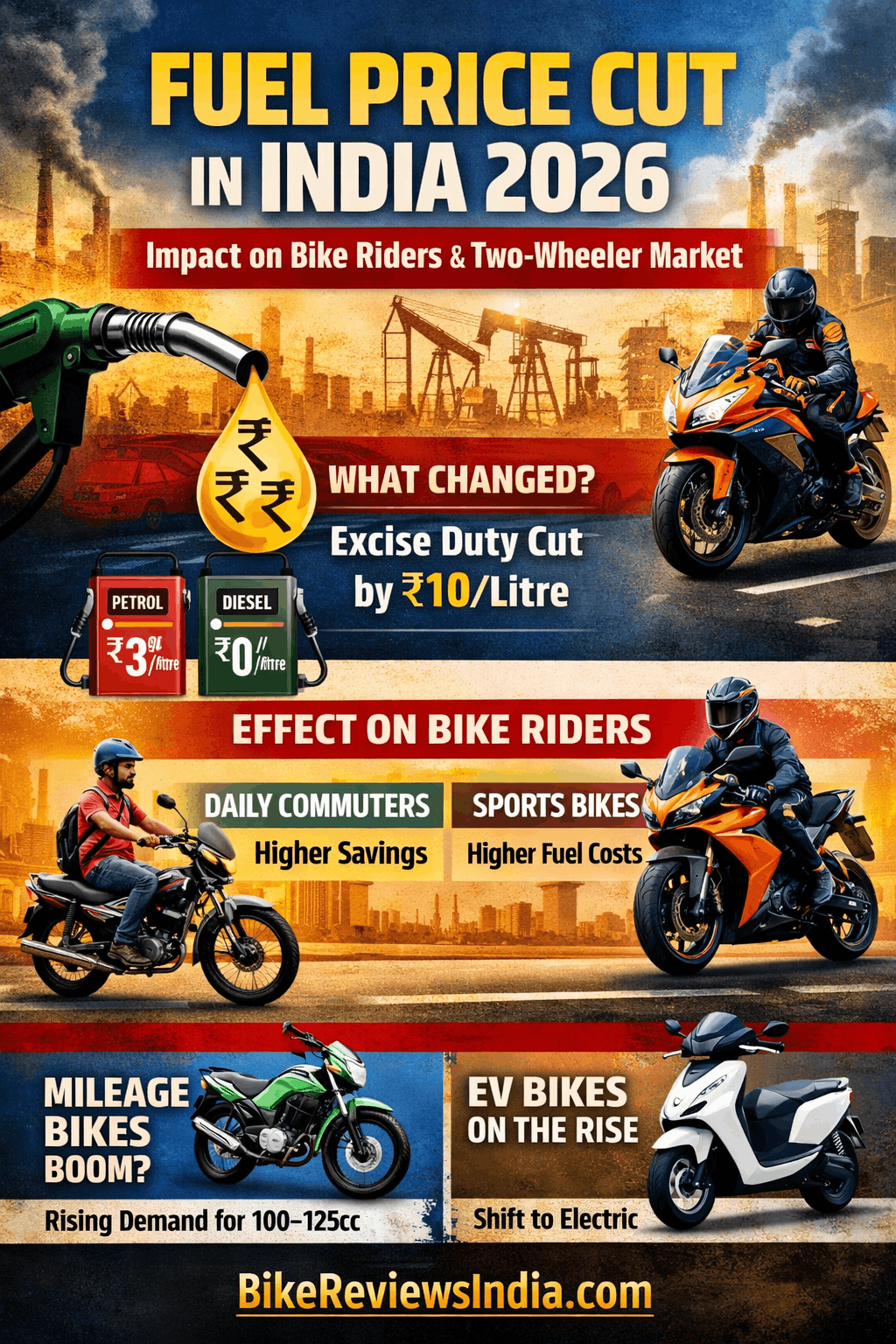
The Indian government has reduced excise duty significantly:
- Petrol excise duty reduced to around ₹3/litre
- Diesel excise duty effectively reduced to zero
- Aim: Reduce inflation pressure and support oil companies
However, this does not guarantee immediate petrol price reduction at fuel pumps.
❗ Why Petrol Prices May Not Drop Immediately
Even after the fuel tax cut, prices may remain stable for now due to:
- Oil Marketing Companies (OMCs) recovering past losses
- Volatility in global crude oil prices
- Rupee vs Dollar exchange fluctuations
👉 This means bike riders will experience gradual relief, not instant savings.
🏍️ Impact on Bike Riders in India
1. Daily Commuters (100–125cc Bikes)
For riders using bikes like Splendor, Platina, or Shine:
- Monthly fuel expenses remain significant
- Small price drops = noticeable savings
- Mileage continues to be the top priority
👉 Example:
A ₹2/litre drop can save ₹300–₹500/month for daily commuters.
2. Premium & Sports Bike Riders
For bikes like KTM, Royal Enfield, Yamaha R15:
- Higher fuel consumption = higher cost sensitivity
- Touring and long rides become more expensive
- Premium petrol users still pay more
📊 Fuel Price Breakdown in India
Understanding fuel pricing helps riders see the bigger picture:
| Component | Contribution |
|---|---|
| Crude oil + refining | 35–45% |
| Central excise duty | 20–25% |
| State VAT | 20–30% |
| Dealer + OMC margin | 5–8% |
👉 Taxes alone make up 40–55% of petrol price in India.
📈 Impact on Two-Wheeler Market Trends
🔹 1. Rising Demand for Mileage Bikes
High fuel prices push buyers toward:
- 100–125cc segment
- High mileage bikes (70+ km/l)
- Budget-friendly commuting options
🔹 2. Growth of Electric Bikes (EVs)
Fuel price pressure is accelerating EV adoption:
- Lower running cost vs petrol bikes
- Increasing government subsidies
- Brands like Ola, Ather, TVS gaining traction
🔹 3. Touring & Riding Culture Shift
- Long-distance travel costs increase
- Riders plan trips more carefully
- Fuel efficiency becomes part of ride strategy
💰 Fuel Prices & the Indian Economy
Fuel prices impact more than just your bike:
- Transportation cost increases
- Product prices rise (inflation effect)
- Household budgets tighten
Fuel taxes are also a major revenue source, which is why prices cannot drop drastically.
🔮 Future of Fuel Prices in India
Short-Term Outlook:
- Stable prices with minor fluctuations
Mid-Term Outlook:
- Dependent on crude oil and global tensions
Long-Term Outlook:
- Strong shift toward EV mobility
- Better fuel-efficient engines
🧠 Expert Verdict (BikeReviewsIndia)
The fuel excise cut is a short-term relief strategy, not a long-term fix.
✔ What Riders Should Do:
- Choose high mileage bikes
- Maintain proper riding habits
- Consider EV options for daily commuting
👉 Fuel prices will continue shaping India’s two-wheeler market and buying behavior.
🔍 FAQs (SEO Boost Section)
Q1. Will petrol prices decrease after excise duty cut?
Not immediately. Prices may drop gradually depending on market conditions.
Q2. How do fuel prices affect bike mileage?
Higher fuel prices increase running cost, making mileage a key buying factor.
Q3. Is this the right time to buy an EV bike?
Yes, rising fuel prices make EVs a cost-effective long-term option.
📢 Final Words
Fuel prices are no longer just an economic factor—they directly influence how India rides.
Whether you’re a daily commuter or a weekend rider, understanding fuel trends can help you make smarter decisions.